Net-zero public building
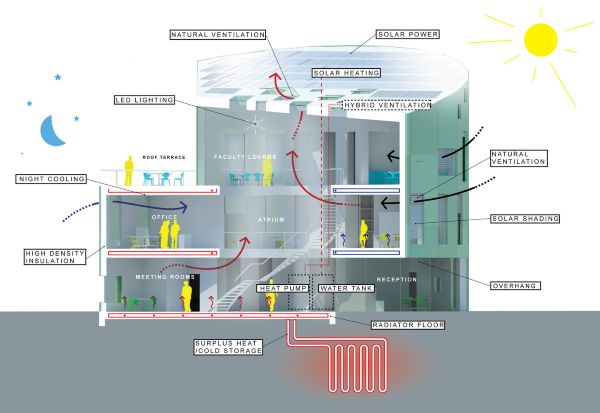
The Green Lighthouse: the first net-zero public building in Denmark.Green Lighthouse diagram of low-energy techniques, such as natural ventilation, heating, and cooling, together with depiction of occupants and environmental conditions. (Christensen og Co. Arkitekter A/S, Green Lighthouse, University of Copenhagen, 2009).
Over the past 10 years, I have had the privilege to work with a great team of researchers, software developers, architects, and engineers to develop a number of software systems, prototypes, and concepts that can help us to transform the built environment from the problematic polluter it is today, to the climate cure it can become.